
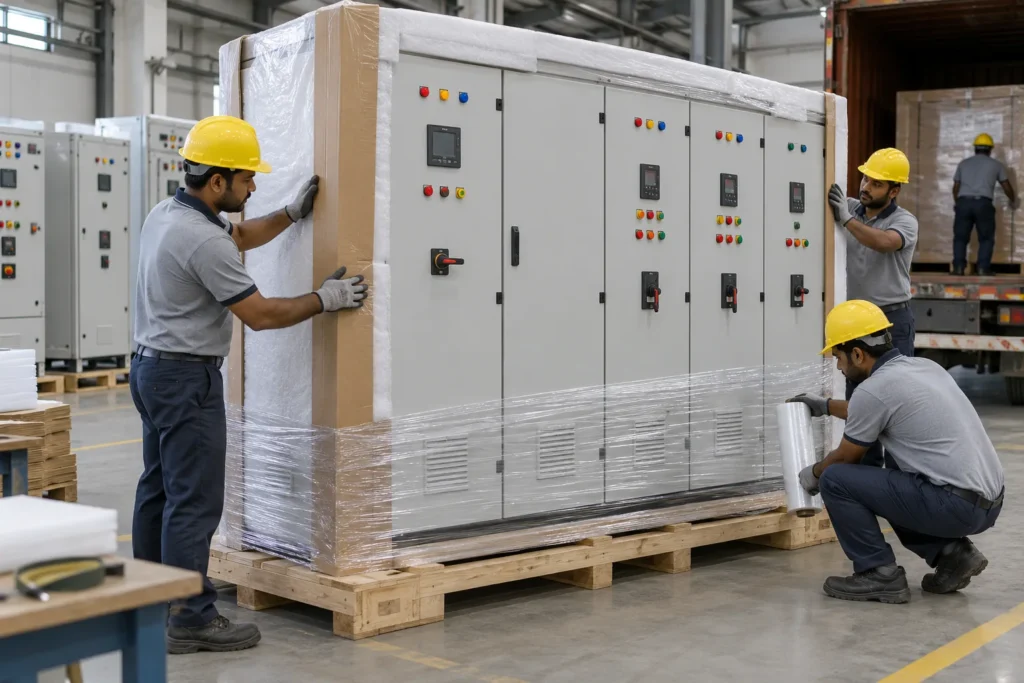
Quick Answer: Choose an electrical panel manufacturer in India by checking application experience, in-house fabrication and engineering, IEC/IS compliance, documented routine tests, clear lead-time start dates, and written change-approval processes. Compare every supplier against the same requirement brief and quotation scope.
Introduction
Choosing an electrical panel manufacturer in India is easier when you compare suppliers on the same checklist: application fit, engineering support, quality documents, lead time, and change management. The right partner should match the panel to your equipment and site, confirm inspection and test documents in writing, and clearly explain what is included and excluded. This guide gives B2B buyers a practical framework to evaluate control panel manufacturers in India and electrical panel suppliers fairly without relying on price alone.
Why Consider an Indian Electrical Panel Manufacturer?
An Indian electrical panel manufacturer can offer practical advantages for projects based in India, including easier communication, local site coordination, and simpler logistics planning. However, the value of these benefits depends entirely on the specific manufacturer and the project requirements.
Working with a domestic supplier often makes it easier to discuss drawings, specifications, and design changes with the team handling the order. Local production can also simplify site visits, delivery scheduling, and after-sales support. That said, not every Indian manufacturer operates the same way. The key is to ask for specifics rather than assuming every electrical panel supplier offers the same level of engineering support or project coordination.
Whether you are evaluating a specialized control panel manufacturer India option or a broader electrical panel supplier, assess each one against the same set of requirements. This makes quotations easier to compare and reduces the risk of overlooking critical scope differences. For a view of broader market changes, see key trends in electrical products for 2026.
Key Selection Criteria for an Electrical Panel Manufacturer in India
Selecting the right electrical panel manufacturer in India requires looking beyond years in business. The most useful evaluation focuses on relevant application experience, engineering support, and the clarity of the manufacturer’s technical and commercial processes.
1. Start with a Clear Requirement
Before requesting prices, prepare the information the manufacturer will need to understand the job. This includes the panel’s purpose, electrical ratings, connected equipment, operating conditions, installation location, and any space or access limitations. Share drawings or a specification if available, and note which details are still being confirmed.
A clear brief helps control panel manufacturers in India quote on the same basis. If one quotation includes items that another leaves out, ask for the difference in writing before comparing totals. This step alone can prevent significant misunderstandings later.
2. Check Experience and Capabilities
Ask about experience with projects similar to yours. The useful question is not simply how many years a company has been operating, but whether it has handled comparable applications, requirements, or production volumes.
Find out who will review your requirements, prepare drawings, answer technical questions, and coordinate the order. Ask what information the team needs from you and when. A clear point of contact can make it easier to resolve questions before they hold up production. For B2B buyers, this coordination capability is often as important as the manufacturer’s technical equipment.
3. Match the Product to Your Application
Panel requirements vary significantly from one project to another. Ask the manufacturer to explain how the proposed design fits your equipment and site conditions. Check dimensions, access for operation and maintenance, cable entry, mounting, labelling, and any interfaces with other systems that matter to your project.
If you need a refresher on panel fundamentals, read understanding the basics of electrical switch panels. If you are comparing different designs, ask what changes in function, materials, or scope. This gives you a more useful comparison than looking at price alone. A lower-priced panel that requires site modifications or lacks necessary documentation may prove more expensive over its lifecycle.
4. Ask About Quality Checks and Documents
Before placing an order, ask what checks are carried out during production and before dispatch. Confirm which inspection records, drawings, test documents, or other project documents are included, and when they will be provided. If your project has specific review or approval steps, share them early.
Do not rely on a general promise that a product meets your needs. Ask the supplier to confirm the relevant requirements and documents for your order in writing, so both sides have the same understanding. This is especially important for projects that require compliance verification or third-party approvals.
5. Confirm Lead Time and Delivery Details
Ask when the delivery period starts and what needs to happen first, such as approval of drawings or receipt of final specifications. Check what could affect the schedule and how you will be told if dates change.
Also confirm the delivery location, packaging expectations, transport responsibility, and whether delivery will happen in one shipment or several. If your site has receiving or access rules, mention them before the order is finalized. A manufacturer that communicates proactively about schedule risks is generally easier to work with than one that only provides updates when prompted. Maintenance planning also affects long-term reliability; see the importance of regular electrical panel maintenance for safety.
6. Agree on Customization and Changes
Some projects need specific dimensions, cable entries, labels, finishes, or other design details. List these requirements clearly and ask the manufacturer to show them in the drawings or order documents for your approval.
Agree on how changes will be requested and approved. A change made after production starts may affect cost, timing, or work already completed. Keeping approvals and revised drawings in writing helps everyone work from the same version and reduces the risk of disputes.
Local Insight: Gujarat and Surat Industrial Belt
For projects in Gujarat, choosing a manufacturer based in or near the industrial belt can simplify factory visits, drawing discussions, and delivery coordination. Surat, Ahmedabad, Vadodara, and Ankleshwar have dense chemical, pharmaceutical, textile, and manufacturing clusters. ATSPL manufactures PCC, MCC, and APFC panels from Sachin GIDC, Surat, supporting industrial and commercial projects across Gujarat and other parts of India.
Product Range: What Should an Electrical Panel Supplier Offer?
A capable electrical panel manufacturer in India should offer a product range that covers the core power distribution and motor control requirements of industrial, commercial, and infrastructure projects. While not every supplier manufactures every panel type, the range should align with your project’s needs.
Core Panel Types to Evaluate
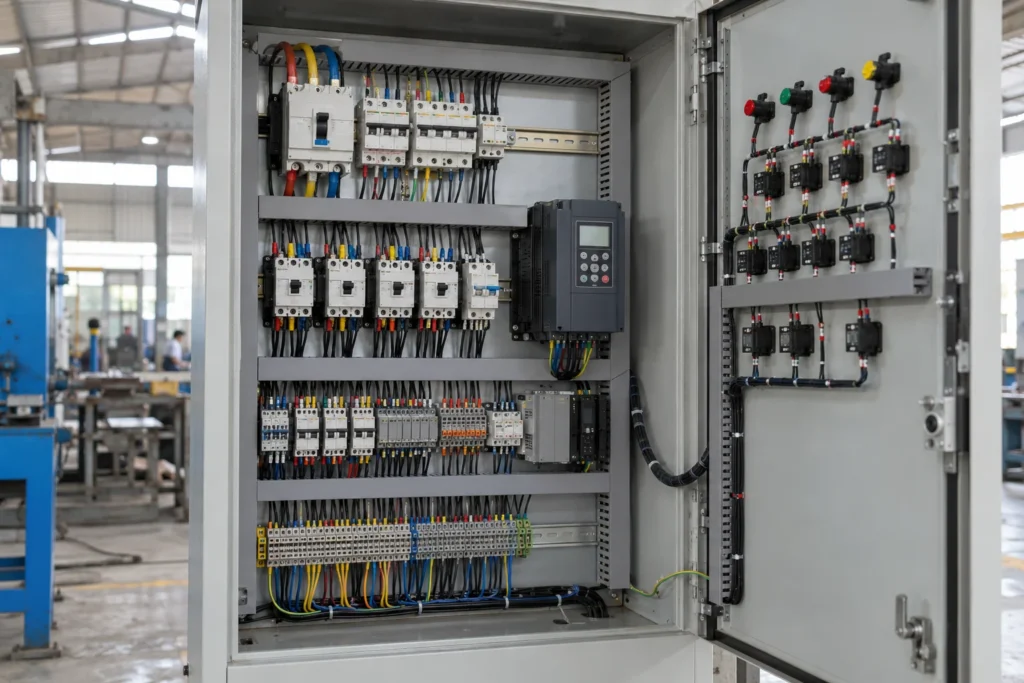
Power Control Center (PCC) Panels are used for main power distribution, controlling and protecting electrical power to connected equipment. A PCC panel is essential for industrial facilities, commercial projects, and infrastructure developments that require dependable power distribution.
Motor Control Center (MCC) Panels centralize the control and protection of multiple electric motors. MCC panels improve operational safety, simplify maintenance, and support reliable industrial processes in manufacturing, water treatment, and processing facilities.
Automatic Power Factor Correction (APFC) Panels automatically monitor reactive power demand and switch capacitor banks to maintain an optimal power factor. These panels help reduce electricity penalties and improve energy efficiency.
Other relevant panel types include Power Distribution Boards (PDB), DOL Starter Panels, VFD Panels, PLC Panels, HMI Panels, and IMCC Panels. The manufacturer’s ability to configure these panels according to project-specific load requirements, environmental conditions, and automation needs is a key differentiator. For industry-specific selection guidance, read choosing the right electrical panel for different industries.
Manufacturing and Integration Capabilities
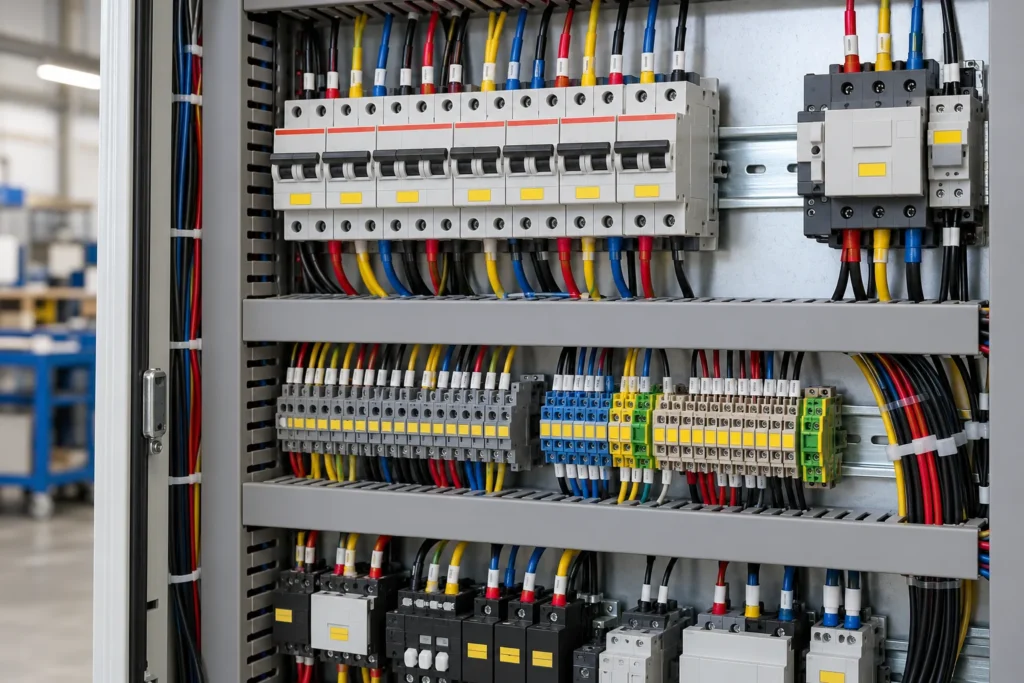
Ask whether the manufacturer handles enclosure fabrication, busbar work, wiring, and component integration in-house or through partners. For a broader overview of enclosure fabrication, refer to the electrical and data enclosure page. For component-level decisions such as how to choose the MCB, confirm the bill of materials and brand preferences early. If your project specifies branded components, check whether the supplier is an authorized Havells distributor.
For projects requiring automation, confirm whether the panel can be integrated with PLC and SCADA systems for centralized monitoring and control. A manufacturer with in-house engineering and fabrication capabilities can often respond more effectively to customization requirements and schedule changes.
Quality Checks and Standards: What to Confirm Before Ordering
Quality assurance is a critical differentiator among control panel manufacturers in India. Buyers should confirm the specific standards, tests, and documentation that apply to their order rather than relying on general claims of quality.
Relevant Standards and Certifications
For low-voltage electrical panels in India, key standards include IEC 61439-1 and IEC 61439-2, which cover the design, construction, and verification of low-voltage switchgear and controlgear assemblies. IS 8623 is the corresponding Indian standard for factory-built assemblies. Many projects also require ISO 9001 certification for the manufacturer’s quality management system.
CPRI type test reports are frequently requested by procurement teams and government tenders. These reports verify short-circuit withstand capacity, temperature rise, and enclosure protection ratings. For a broader explanation of certification in product development, see CPRI certification and quality assurance. For a wider standards walkthrough, read the essential switch and accessories standards and certifications guide. Also see why following safety standards for electronics and electrical devices is important.
Tests and Documentation to Request
Before dispatch, a quality-focused manufacturer should perform routine tests on each panel. These typically include wiring continuity checks, insulation resistance testing (megger), and high-voltage withstand tests. For larger projects, type test certificates for short-circuit performance and temperature rise may also be required.
Ask the manufacturer to confirm in writing which inspection records, drawings, test certificates, and operation and maintenance documents will be provided with your order. Also clarify when these documents will be delivered—ideally before dispatch or alongside the panel.
Lead Times and Delivery: What Affects the Schedule?
Lead time for an electrical panel manufacturer in India depends on several factors, including the complexity of the panel, component availability, drawing approval timelines, and the manufacturer’s current production load.
Starting the Schedule on the Right Foot
Ask the manufacturer when the delivery period begins. In many cases, the clock starts only after drawing approval or receipt of final specifications. Clarifying this upfront prevents misunderstandings about when the panel will actually be ready.
Confirm what could affect the schedule and how you will be notified if dates change. A manufacturer that provides proactive updates and has a clear escalation process is easier to coordinate with than one that only communicates when issues arise.
Delivery and Logistics Details
Confirm the delivery location, packaging expectations, transport responsibility, and whether delivery will happen in one shipment or multiple lots. If your site has specific receiving hours or access restrictions, communicate these before the order is finalized. For projects in industrial areas, coordinating delivery with site readiness is often as important as the manufacturing timeline itself.
Customization and Change Management
Customization is a standard requirement for many industrial and infrastructure projects. The right manufacturer should be able to accommodate project-specific dimensions, cable entries, labelling, component preferences, and interface requirements while maintaining quality and schedule discipline.
Documenting Custom Requirements
List all custom requirements clearly and ask the manufacturer to reflect them in the drawings and order documents for your approval. This creates a shared reference point and reduces the risk of scope gaps. For projects with automation or communication requirements, confirm whether the panel design supports the necessary integration.
Handling Changes
Agree on a process for requesting and approving changes. A change made after production starts can affect cost, timing, or work already completed. Keeping approvals and revised drawings in writing helps both parties work from the same version. Before production begins, make sure the people who will install or use the panel have reviewed the details that affect them.
Questions to Ask Before Choosing an Electrical Panel Manufacturer
Use these questions to evaluate electrical panel manufacturers in India on a consistent basis. Clear answers make it easier to compare quotations fairly and identify potential risks before placing an order.
- What information do you need from us to confirm the scope? This reveals how thoroughly the manufacturer intends to understand your requirements before quoting.
- Which drawings or details will you send for approval, and when? This clarifies the design review process and helps you plan internal approvals.
- What inspections and documents are included in your scope? This confirms whether test reports, routine test certificates, and O&M manuals are part of the quotation.
- When does the quoted lead time begin? This prevents ambiguity about whether the schedule starts from the order date or from drawing approval.
- What is excluded from the quotation? Understanding exclusions early avoids cost surprises and scope disputes later.
- How will changes, delays, or revised dates be communicated? This indicates the manufacturer’s communication discipline and project coordination maturity.
If an important point is unclear, ask for written clarification before placing the order. A short written confirmation now can prevent avoidable confusion later.
FAQ: Electrical Panel Manufacturers in India
What should I look for in an electrical panel manufacturer in India?
Look for relevant application experience, in-house engineering and fabrication capability, compliance with IEC 61439 and IS 8623, documented quality tests, and clear communication about lead times and exclusions. The manufacturer should also be able to explain how the proposed panel design fits your equipment and site conditions.
What is the difference between a PCC panel and an MCC panel?
A PCC (Power Control Center) panel is used for main power distribution, controlling and protecting power to connected equipment. An MCC (Motor Control Center) panel centralizes the control and protection of multiple electric motors. Both are essential in industrial facilities, but they serve different functions in the electrical distribution system.
Which standards should an electrical panel comply with in India?
Key standards include IEC 61439-1 and IEC 61439-2 for low-voltage switchgear assemblies, and IS 8623 for factory-built assemblies. Many projects also require ISO 9001 certification and CPRI type test reports for short-circuit and temperature rise performance.
What documents should I receive with an electrical panel order?
Confirm in writing that you will receive approved drawings, routine test reports, and operation and maintenance documents. For projects with compliance requirements, request CPRI type test certificates or equivalent third-party verification documents relevant to the panel’s ratings and construction.
How long does it take to manufacture a custom electrical panel in India?
Lead times vary based on panel complexity, component availability, and drawing approval timelines. Always confirm when the delivery period starts usually from drawing approval, not the order date and ask how schedule changes will be communicated.
Can an Indian manufacturer customize panels for my project?
Yes, many control panel manufacturers in India offer customization for dimensions, cable entries, labelling, component preferences, and automation integration. List your requirements clearly, ask for them to be reflected in the approval drawings, and agree on a change management process before production begins.
What should I check before finalizing an electrical panel supplier?
Read the final quotation alongside the approved drawings and your original requirement. Check that model details, quantities, delivery location, and agreed documents match what you discussed. If two suppliers are close, compare how clearly they have answered your questions and explained any exclusions.
Conclusion
Choosing an electrical panel manufacturer in India does not need to come down to guesswork. Start with a clear brief, check that the supplier can meet the project’s technical and compliance requirements, and confirm quality documents, timing, delivery, and change handling before moving ahead.
Take the same checklist to each conversation and compare the answers alongside the quotations. That will help you choose an electrical panel supplier that fits the needs of your project and gives you a clear understanding of what happens next.
Anubhav Techno Solutions Pvt. Ltd. (ATSPL) designs and manufactures customized PCC, MCC, APFC, and other industrial panels from its facility in Surat, Gujarat, with a focus on application-specific engineering, quality components, and documented testing. For more guides, visit ATSPL blogs.
Request a Quote to discuss your project requirements with the ATSPL team and receive a specification-aligned proposal.