
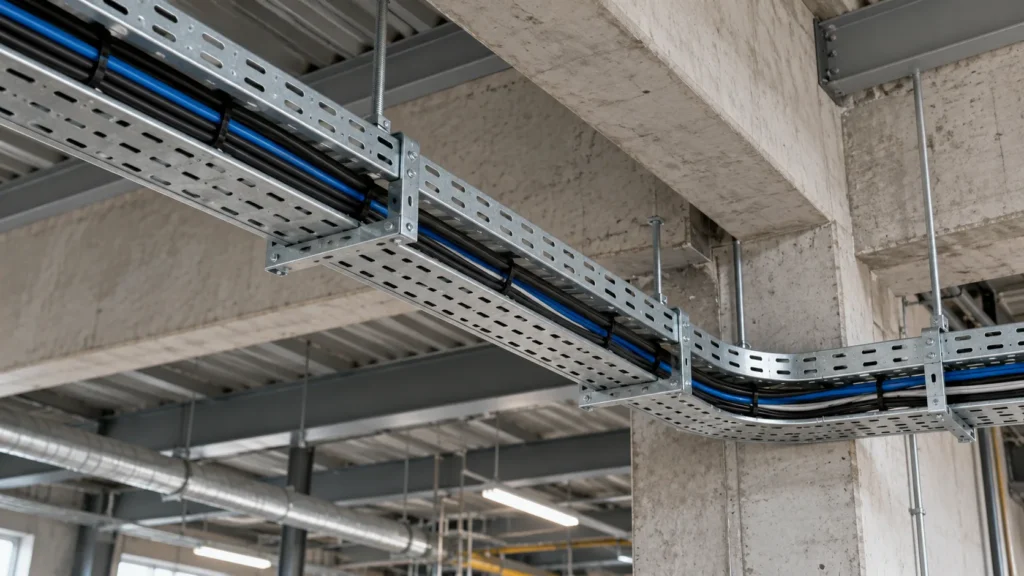
A practical guide for industrial project buyers
A cable tray is easy to overlook while a plant is being designed. Yet once cables are installed, the tray route affects access, maintenance, future expansion and how well cables are supported along their run. Choosing a cable tray manufacturer in Gujarat is therefore more than comparing a price per metre. The supplier needs to understand the project conditions, provide compatible fittings and supports, and make the specified system consistently.
Before requesting quotations, map the route and list the cables, environment, support spans and expected load. Then compare suppliers against the same information. This makes it easier to spot a quote that has left out bends, covers, supports or finish requirements, and helps your engineering team assess whether the proposed system fits the installation.
Start with the cable route and operating environment
Prepare a route drawing or marked-up layout that shows the tray path, changes in direction, elevations, equipment connections and access points. Record cable types and approximate quantities, including planned spare capacity. Separate power, control and communication runs where the project design calls for segregation. The correct arrangement depends on the electrical design and applicable project requirements, so confirm cable spacing and separation with the responsible engineer.
The location matters just as much. An indoor utility room, a production floor, a chemical area and an exposed outdoor route can call for different materials or protective finishes. Consider moisture, dust, corrosive atmosphere, temperature, cleaning methods and the risk of physical impact. A supplier cannot recommend a suitable material if the operating conditions are missing from the enquiry.
Choose the Right Cable Tray Type
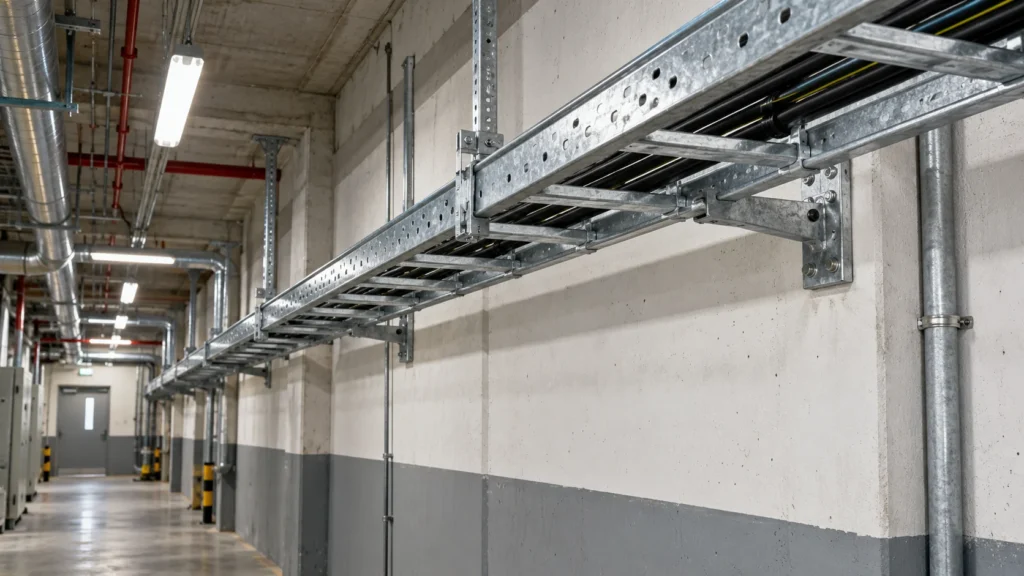
Perforated cable trays have openings in the base that can help with ventilation and drainage in suitable installations. They are often considered for general power, control and instrumentation routes where the cable load and environment match the design. Ladder trays use side rails and cross rungs, leaving the cable run more open. They can be considered for heavier cable routes or locations where access and airflow are priorities. Solid-bottom trays or covered systems may be appropriate where the design calls for additional shielding or protection from debris.
These are starting points, not universal rules. A cable tray manufacturer should review the actual load, support spacing, cable bend requirements, route geometry and installation conditions. Ask whether the quotation covers elbows, tees, reducers, risers, couplers, covers and support hardware. A tray length alone is not a complete cable management system.
Check Materials, Finish and Fabrication Quality
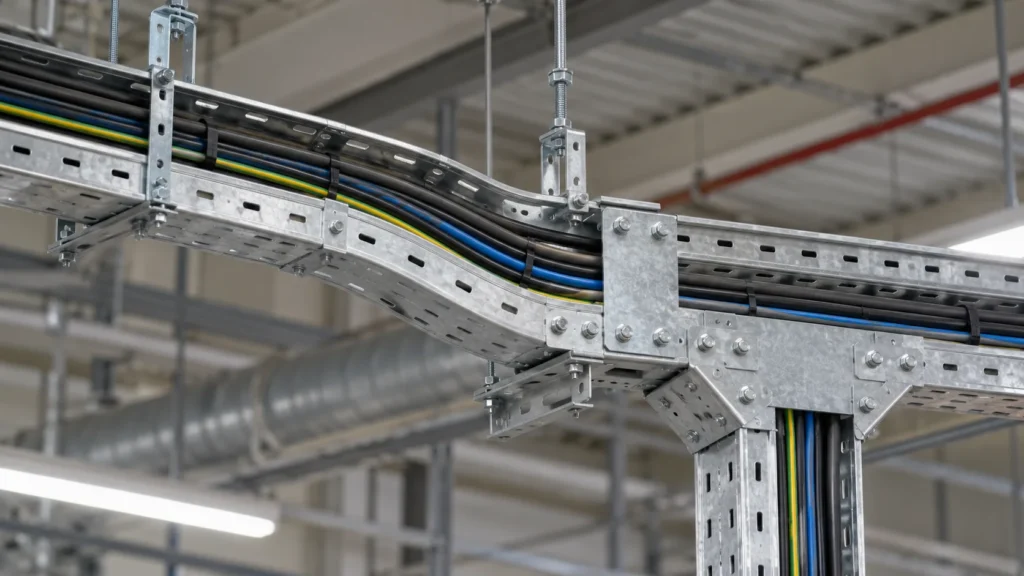
Common project choices include pre-galvanized steel, hot-dip galvanized steel, stainless steel and aluminum. Each has different properties, weight, cost and suitability for environmental exposure. The specification should state the material, thickness, finish and any coating requirements rather than relying on a general label such as “GI tray.” Ask the supplier to identify the proposed material and finish clearly in its offer.
For a cable tray manufacturer in Gujarat, ask how the product is fabricated and inspected. Relevant checks may include dimensions, hole pattern, straightness, edge condition, joint fit and finish consistency. If the project has a defined coating or fabrication specification, request the corresponding inspection records or test documents. Confirm how cut edges, welds and damaged coating are treated, especially when the tray will be installed in a demanding environment.
The IEC 61537 standard sets requirements and tests for cable tray and cable ladder systems used to support and accommodate cables. Ask which standard or project specification the offered system is designed to meet, and request evidence that applies to the exact product and configuration being quoted. A supplier’s general statement about standards should not replace a review by the project engineer.
How to Evaluate Manufacturing Capacity and Technical Support?
A quotation should make the proposed system easy to review. Look for tray width, side height, material thickness, finish, fitting types, support method and the basis used for load and span. Confirm whether the stated load capacity applies to the proposed support spacing and configuration. If these details are absent, request them before comparing prices.
Ask whether the supplier can work from project drawings, bills of quantity or cable schedules. For a custom route, confirm the process for reviewing drawings and resolving changes before fabrication. Check whether the supplier can provide dimensional details, product drawings, sample pieces or other submittals required by the project. Clear technical communication early can prevent mismatched fittings and site rework later.
- Does the quotation list all tray sections, fittings, connectors, covers and supports?
- Are material, thickness, finish and dimensions stated for each item?
- Is the load or span basis documented for the planned support arrangement?
- Can the supplier provide product information and inspection records for review?
- Are packaging, delivery location, lead time and replacement handling clear?
How to Assess Delivery Planning and After-Sales Support?
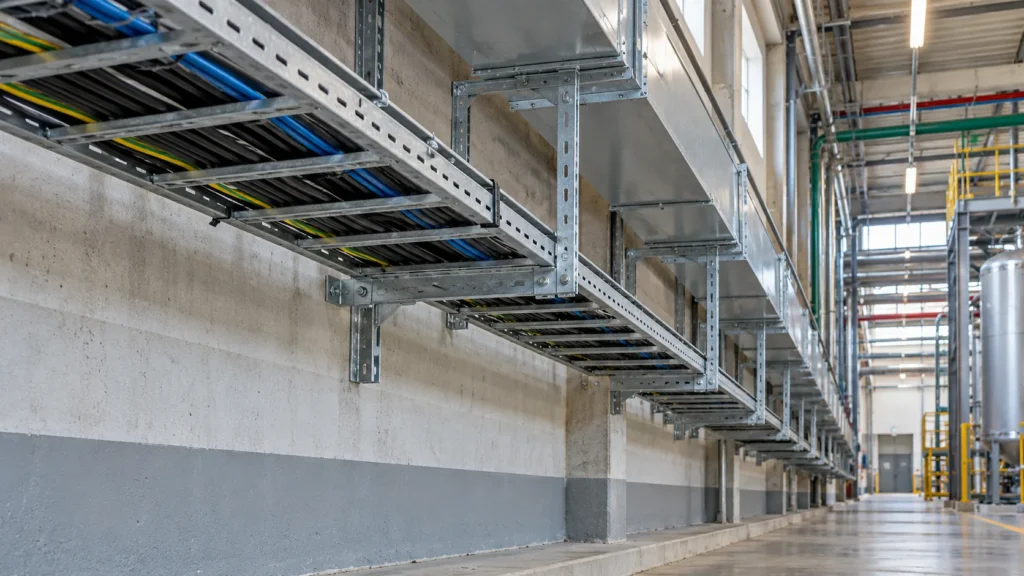
Manufacturing capacity matters when the tray package is tied to a construction schedule. Share the required delivery dates, expected quantities and whether deliveries need to be phased. Ask the cable tray supplier to state the lead time for standard items and any custom bends or finishes separately. Confirm how products will be identified and packed so that site teams can sort them by area or installation sequence.
Also agree how the supplier will respond if a dimension, finish or fitting is found to be incorrect. A named contact and a simple process for resolving technical questions are useful during installation. If the project includes future phases, ask whether the supplier can maintain consistent specifications and traceable product details for later orders.
How to Compare Cable Tray Manufacturers' Pricing and Quotations?
Use one enquiry package for every supplier. Include drawings, cable information, environmental conditions, material and finish requirements, the expected support spacing, required documents and delivery schedule. Compare the complete offered scope rather than the headline unit rate. One quotation may include fittings and supports while another may price tray lengths only.
A capable cable tray manufacturer in Gujarat should be able to explain what is included, identify assumptions and flag details that need engineering confirmation. Look for clear drawings and technical answers, realistic delivery commitments and evidence that matches the project specification. These checks help procurement and engineering teams compare offers on the same basis.
Frequently asked questions
What information should I send to a cable tray manufacturer?
Send the route drawing, cable types and approximate quantities, expected loads, support spacing, environment, preferred material and finish, fittings, required documents and delivery schedule. If some information is still being finalized, label the assumptions so the quote can be reviewed accurately.
Should I choose a perforated or ladder tray?
It depends on cable loads, route conditions, access, ventilation, supports and the project design. Share the application with the engineer and supplier instead of choosing by appearance alone.
How do I compare two cable tray quotations?
Compare materials, dimensions, finish, load basis, fittings, supports, documentation, packing and lead time. Make sure each supplier priced the same scope.
Request a cable tray quotation
Anubhav Techno Solutions lists GI, ladder and perforated cable tray products and provides cable management fabrication from its facility in Sachin GIDC, Surat. To discuss a project, share the route details, cable schedule, operating environment, material and finish requirements, and delivery plan. Ask the team to confirm the proposed scope and supporting technical documents before approval.