
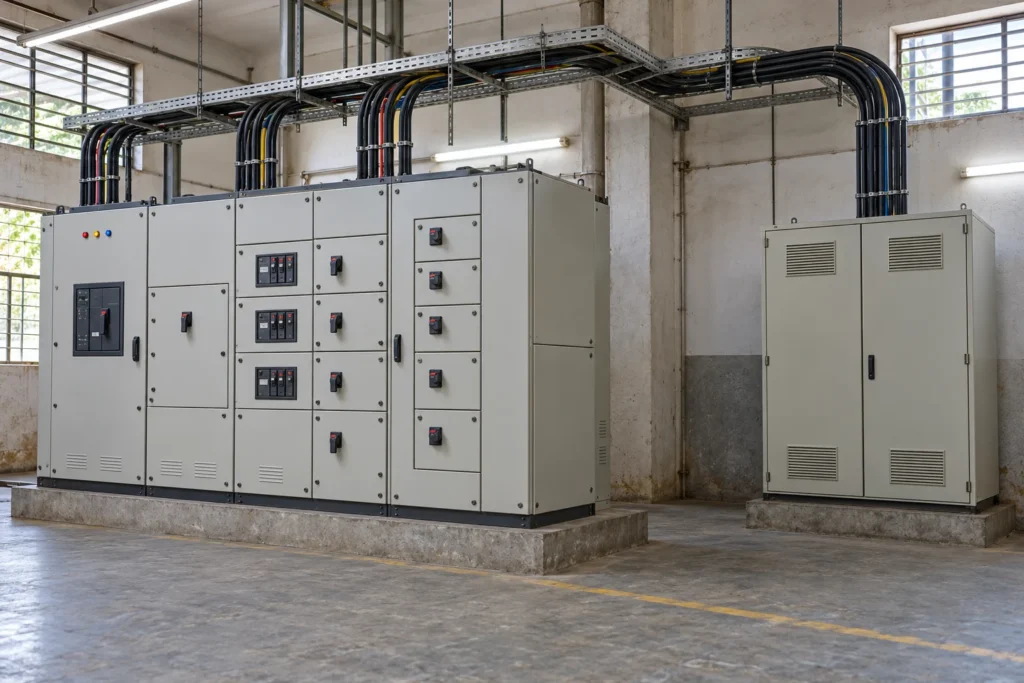
APFC Panel: Benefits & Applications in Industrial Power Factor Correction
A factory’s electrical bill does not tell the whole story of how efficiently its equipment uses the supply. Motors, transformers and other inductive loads draw reactive power as well as the active power that does useful work. When the site’s power factor is low, the utility may apply charges under its tariff, and more current may be needed to deliver the same useful power.
An automatic power factor correction panel, usually called an APFC panel, helps manage this reactive demand by switching capacitor steps in or out as the load changes. Correctly selected and maintained, it can help keep the installation’s power factor near a chosen target. The right setting and equipment depend on measured site conditions, tariff rules and the electrical design.
What Is an APFC Panel?
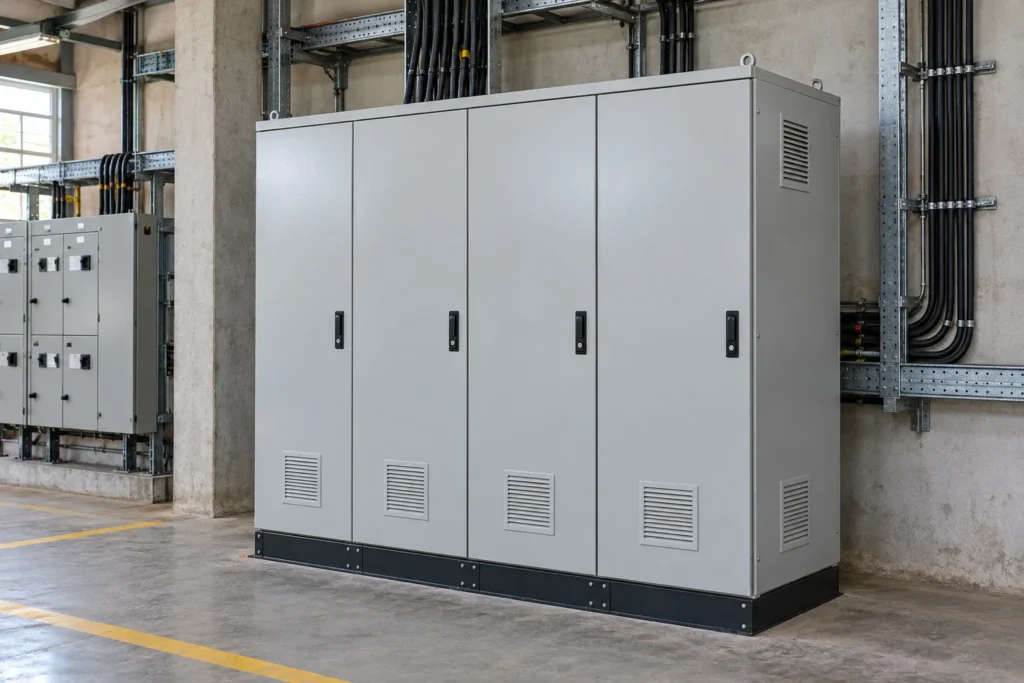
An APFC panel is a switchboard that automatically connects capacitor banks to an electrical system in stages. A controller monitors the power factor, typically using measurements from the incoming supply and a current transformer. When the measured value moves away from the set target, the controller switches capacitor steps to provide reactive power locally. If demand falls, it disconnects steps to avoid overcompensation.
In simple terms, it adjusts compensation as the plant load changes instead of leaving one fixed capacitor permanently connected. That can be useful in facilities where motors and other equipment start, stop or operate at varying loads through the day.
Why Is Power Factor Correction Important in Industries?
The main reason to consider power factor correction is to manage reactive power and meet the site’s electrical requirements. A low power factor can increase apparent power and current for a given amount of active power. Depending on the utility tariff and demand profile, correcting it may reduce power-factor related charges or free capacity in parts of the electrical distribution system. The actual effect on a bill should be checked against the site’s utility statements; savings are not automatic or identical for every facility.
An APFC panel can be considered in manufacturing plants, commercial buildings, water treatment facilities and other sites with substantial changing inductive loads. Examples include motor-driven pumps, compressors, fans and production machinery. A site survey should first confirm that the issue is low power factor and determine whether harmonics or other power-quality conditions are present.
How Does an APFC Panel Work?
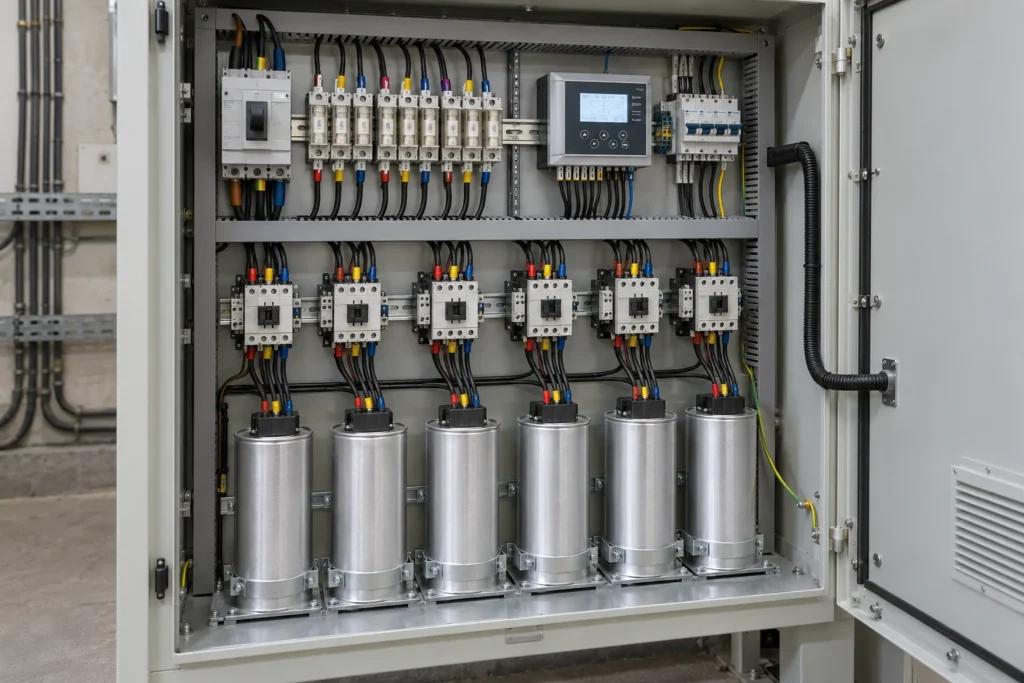
The controller reads the system’s electrical conditions and compares the measured power factor with its set point. It then switches capacitor steps using components selected for the application. Multiple steps let the panel adjust compensation in increments as the plant demand changes. The arrangement, step sizes, switching method, protection and ventilation are specified for the actual system.
The panel should not be sized by selecting a capacitor bank from the connected motor nameplates alone. Operating loads vary, and the existing power factor may be different from assumptions. Engineers commonly use recorded active power and power factor to estimate the reactive compensation required to move from the existing condition to a target. Schneider Electric describes a calculation using active power and the difference between the tangent of the existing and target phase angles. The inputs should come from measurements or reliable billing data, and the final selection should be reviewed by a qualified electrical professional.
How to Select and Size an APFC Panel
A useful selection process begins with data from the installation. Collect recent utility bills, demand readings and, where needed, a power-quality study covering representative operating periods. Note when large loads start or stop, and identify drives, UPS equipment, rectifiers or other non-linear loads that may produce harmonics.
The design review should consider:
- The present and desired power factor, based on measured operating conditions and the applicable utility tariff
- The active load profile and changes in demand over a normal shift or production cycle
- Required compensation in kvar and a suitable number and size of switching steps
- System voltage, installation location, temperature, ventilation and available panel space
- Protection, switching frequency, maintenance access and monitoring requirements
- Harmonic distortion and whether detuned reactors or another power-quality solution are needed
Harmonics need particular attention. Variable speed drives and other power-electronic equipment can introduce harmonic currents. Capacitors may be affected by these conditions, and an unsuitable bank can contribute to resonance or overheating. ABB’s power factor correction guidance says that detuned capacitor banks should be considered where harmonic distortion is present, with the correct design based on an assessment of the network. Do not add reactors or select a capacitor bank by rule of thumb; ask the electrical engineer to evaluate measurements and system configuration.
Key Benefits of APFC Panels
Potential benefits depend on the site and its utility rules. Better power factor may reduce reactive power charges where the tariff includes them. Lower reactive current on the relevant parts of the network can also reduce some distribution losses and release capacity, subject to the installation layout and operating conditions. These outcomes should be confirmed through engineering calculations and bill comparisons, not promised as a fixed percentage.
For a simple business case, compare a representative period before and after correction. Review the billed power factor, reactive energy charges, maximum demand, operating hours and any relevant maintenance costs. Include the APFC equipment, installation, inspection and ongoing servicing. If the load profile changes seasonally, use enough months to make the comparison meaningful. This gives the team a more realistic view of payback than a generic savings claim.
Industrial Applications of APFC Panels
APFC panels may suit plants where electrical loads change during operation and reactive demand varies with them. A fixed capacitor bank may be suitable for a steady, dedicated load in some cases, while automatic step control may be more practical when site demand fluctuates. The engineer should decide the compensation method after reviewing the distribution arrangement, load pattern and equipment requirements.
After installation, include the panel in the site’s electrical maintenance plan. Follow the manufacturer’s instructions for isolation, inspection and service. Periodically check alarms, ventilation, capacitor condition, controller readings, connections and protection devices, using qualified personnel and safe procedures. Reassess the settings when the plant adds major equipment or changes its operating schedule.
How to Choose an APFC Panel Manufacturer
When comparing an APFC panel manufacturer, share the load profile, measured power factor, system voltage, tariff target, harmonic assessment and installation conditions. Ask the supplier to explain the proposed kvar capacity, step arrangement, controller, protection, switching components and any reactor requirements. Confirm what drawings, test records, commissioning support and maintenance information are included in the quotation.
Anubhav Techno Solutions lists an APFC panel in its product range and offers low-voltage switchboard solutions for customer-specific requirements. For a project enquiry, provide the available electrical data and ask the team to confirm the proposed scope, ratings, design basis and supporting documents against the project specification.
Frequently asked questions
Does an APFC panel reduce electricity consumption?
It primarily manages reactive power and power factor. It may reduce certain charges or losses depending on the site, but it does not directly reduce the active energy needed by production equipment.
How is an APFC panel sized?
Sizing uses the existing load and power factor, target power factor, system voltage, load variation and relevant power-quality conditions. A qualified engineer should verify the design using representative measurements or billing data.
Are capacitor banks suitable when a site has variable speed drives?
They may be used, but harmonic conditions should be assessed first. The system may require detuned reactors or a different solution, selected by an engineer based on measurements and the network design.
What information should I send for a quotation?
Send recent bills or measured load data, current and target power factor, system voltage, major loads, harmonic information if available, installation conditions, and the required scope and schedule.
Discuss Your APFC Panel Requirements
Share your site readings, target power factor and load details with Anubhav Techno Solutions to discuss a suitable panel scope. Confirm the design basis, ratings, harmonic considerations, test documents and commissioning responsibilities before approving the order.