
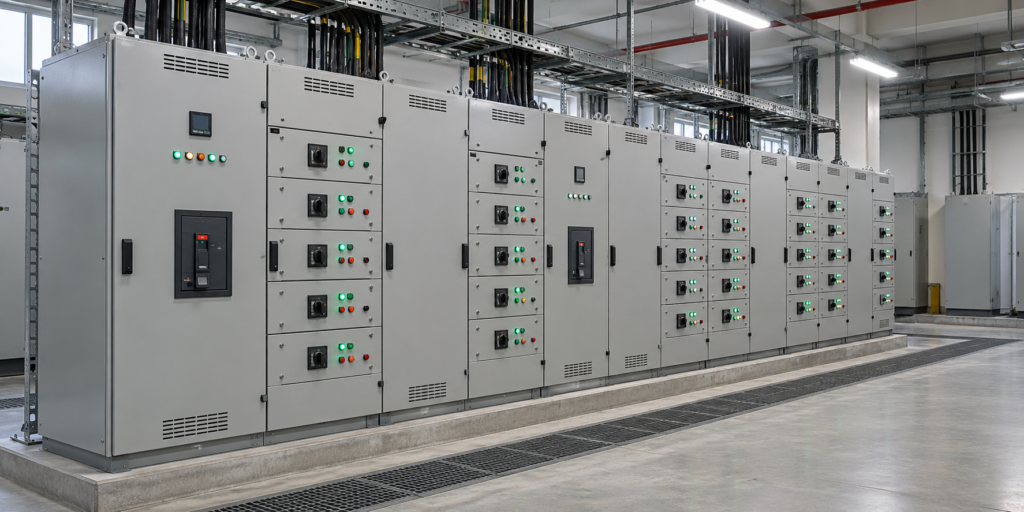
When a plant has many motors, pumps, fans or production machines, the electrical panel arrangement affects how operators control equipment and how maintenance teams isolate faults. Two terms often appear in project discussions: MCC panel and PCC panel. They are related, but they do different jobs. Understanding the difference helps buyers describe their requirements to an MCC panel manufacturer Gujarat and compare proposals on the right basis.
In simple terms, an MCC panel groups motor control and protection for multiple motors. A PCC panel is generally used for power distribution to downstream feeders and systems. The exact design depends on the project single-line diagram, load list, operating method and applicable specifications. This guide explains the distinction, where each panel fits, and what to check before requesting a quotation.
What is an MCC panel?
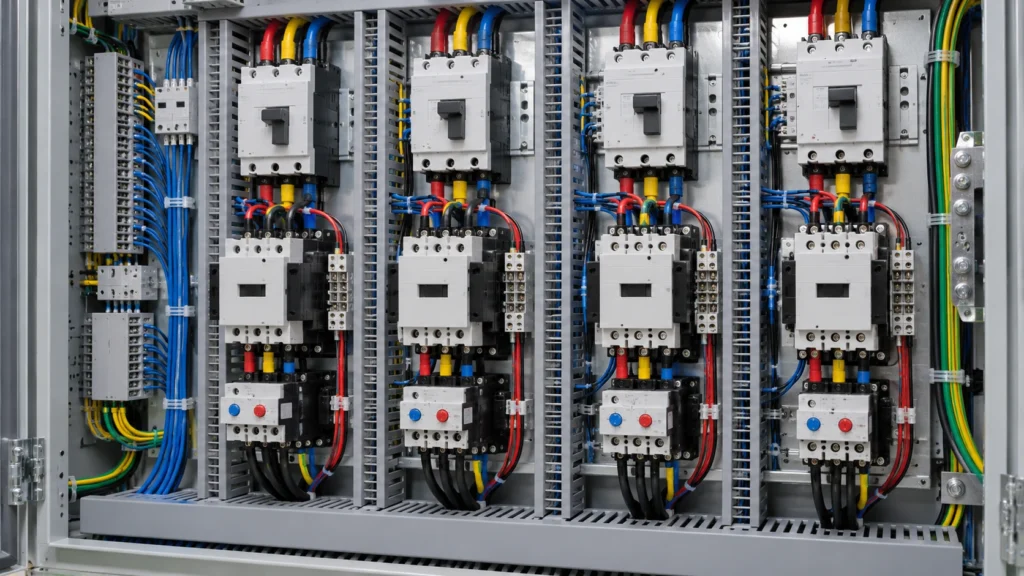
MCC means Motor Control Center. An MCC panel brings motor feeders and their control and protection devices together in one assembly. Depending on the design, a feeder may include a circuit breaker or motor protection device, contactor, overload protection, starter, control wiring and indication. Variable frequency drives or soft starters may be included where the motor and process require them.
Centralizing these circuits can make it easier for operators to start, stop and monitor equipment from a defined location. It can also help maintenance teams identify the relevant feeder and follow the isolation procedure specified for that equipment. The panel must be designed around the actual motor ratings, starting method, duty cycle, fault levels, control signals and site conditions. A standard arrangement should not be assumed to suit every plant.
What is a PCC panel?
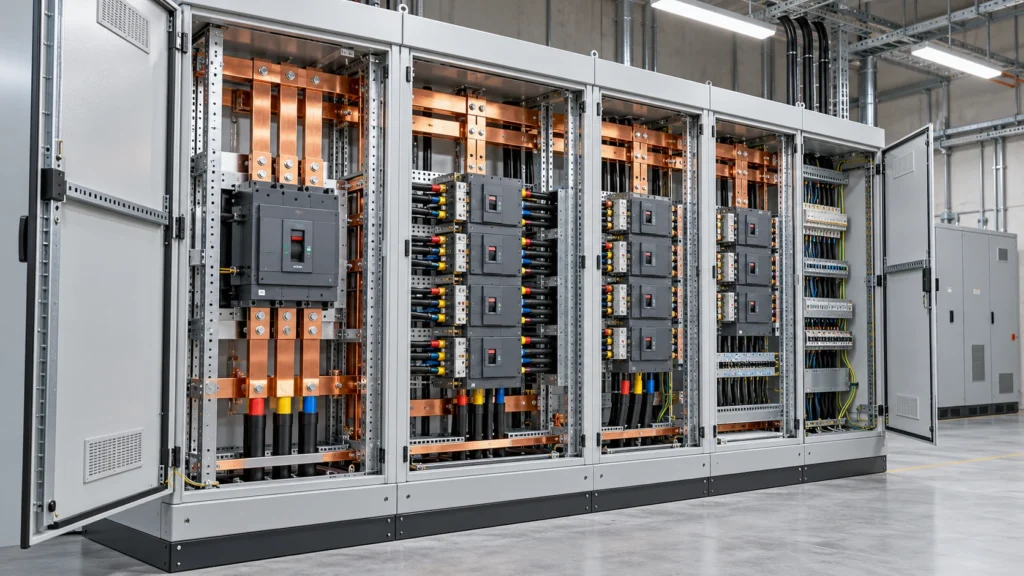
PCC is commonly used for Power Control Center. A PCC panel is primarily concerned with receiving and distributing electrical power to outgoing feeders, which may supply MCCs, distribution boards, large equipment or other sections of a facility. Its arrangement depends on the incoming supply, busbar design, number and rating of outgoing circuits, protection coordination and the plant’s distribution plan.
A PCC and MCC can sit at different points in the same electrical system. The PCC may feed power to an MCC, while the MCC controls individual motors or groups of motor loads. The terms describe different functions; they do not by themselves specify an exact construction, rating or level of protection. Those details must come from the project documents and design review.
MCC panel vs PCC panel: the practical difference
Think about what the panel needs to do. If the requirement is to distribute power from an incoming source to multiple downstream circuits, the design is likely to include a PCC function. If the requirement is to control and protect several motors, the design is likely to include an MCC function. Some projects need both.
- Main purpose: PCC distributes power among feeders; MCC manages motor feeders and their control.
- Typical outgoing circuits: PCC feeders may supply panels or larger loads; MCC feeders are arranged for motors and associated equipment.
- Control needs: MCC designs often include motor starting, interlocks, local or remote commands, and status signals.
- Project relationship: A PCC may supply an MCC, so the two can be coordinated parts of one distribution system.
- Selection basis: Choose by function, load data, system architecture and operating requirements, not by the panel name alone.
For example, a water treatment facility may have a PCC distributing supply to process areas and an MCC handling pumps, blowers and other motors. A manufacturing line may use a similar arrangement for conveyors, cooling systems and production equipment. These are examples only; the electrical designer should confirm the actual architecture.
Where an MCC panel is used
MCCs are useful where multiple motors need coordinated control and protection. Applications can include manufacturing and processing plants, textile facilities, chemical and pharmaceutical operations, pumping stations, water and wastewater treatment, HVAC and building utilities, and infrastructure projects. The number of motors alone does not determine the design. Operating sequence, criticality, maintenance access, automation and available space also matter.
Some installations use fixed feeder units, while others may specify draw-out units to support particular maintenance practices. Neither arrangement is automatically right for every site. Discuss the expected maintenance process, isolation rules and continuity needs with the project engineer before selecting a configuration.
Key details to confirm before choosing a panel
Before asking an MCC panel manufacturer Gujarat or PCC supplier for a quotation, gather the information that affects sizing and configuration:
- Approved single-line diagram and distribution architecture.
- Motor list with ratings, voltage, full-load current, starting method and duty.
- Incoming supply details, available fault level and required protection coordination.
- Feeder count, spare capacity, metering, control philosophy and interlocks.
- Required automation interfaces, such as PLC or SCADA signals, where applicable.
- Installation location, ambient conditions, enclosure protection, cable entry and access space.
- Applicable project standards, inspection and testing requirements, documentation and delivery schedule.
For low-voltage power switchgear and controlgear assemblies, IEC 61439-2:2020 sets specific requirements within its stated scope. Ask the responsible engineer and manufacturer which standards, verifications and project requirements apply to the proposed assembly. Do not infer compliance or certification from a product description alone.
When an APFC panel is also needed
An APFC panel serves a different purpose from an MCC or PCC. It is used for automatic power factor correction, typically switching capacitor steps in response to the installation’s reactive power demand. It may be part of a broader electrical project, but it does not replace motor control or main power distribution. Whether it is required, and how it should be sized, depends on measured or calculated loads and the electrical design. Have the project engineer assess it rather than choosing it only because motors are present.
Choosing an MCC panel manufacturer in Gujarat
Look for a manufacturer who asks for the load schedule, drawings, site conditions and control requirements before proposing a configuration. The discussion should cover component selection, busbar and feeder arrangement, enclosure material, segregation, ventilation, cable routing, interlocking, earthing, inspection and testing. Ask what drawings and test records will be supplied and how design changes are handled.
Anubhav Techno Solutions describes customized MCC panels for project-specific motor loads, feeder configurations, operating environments and automation needs. Its published information also lists fixed and draw-out configurations, options such as VFDs and soft starters, and possible PLC or SCADA integration. Treat these as capabilities to discuss for your project; confirm the exact scope, components and specifications in the quotation and approved drawings. See the company’s MCC panel details for its product information.
If you are comparing an MCC panel manufacturer Gujarat shortlist, compare proposals against the same drawings and technical schedule. A lower price is difficult to assess if feeder scope, components, enclosure details, testing or documentation differ.
Questions to ask before placing an order
- Does the proposed panel match the latest approved single-line diagram and motor list?
- Which protection, starter and control components are included for each feeder?
- Are the required PLC, SCADA, remote signals or interlocks included?
- What enclosure, segregation, cable-entry and site-condition details are assumed?
- Which inspection, routine tests, drawings and handover documents are included?
- What information or approvals are needed to confirm the delivery schedule?
Frequently Asked Questions
Can one panel work as both a PCC and MCC?
Some assemblies may combine functions, but the arrangement must be engineered for the loads, protection, segregation and project requirements. Ask the designer to show the function and feeder arrangement clearly in the drawings.
Does every factory need an APFC panel?
No. The requirement depends on the installation’s power factor, loads, utility or project requirements, and engineering assessment. It is a separate decision from whether the site needs MCC or PCC functions.
What should I send to request a quotation?
Share the single-line diagram, load and motor schedules, control requirements, site conditions, required standards, delivery location and any inspection or documentation requirements. If some details are still being finalized, identify them as open items so the supplier can state its assumptions.
Conclusion
A PCC panel and an MCC panel serve related but distinct roles: one focuses on power distribution, while the other focuses on motor control and protection. Many industrial systems need both, coordinated through the approved electrical design. Define the loads, feeders, controls and site conditions first, then compare manufacturers on a consistent technical scope. For a project-specific discussion, contact Anubhav Techno Solutions through its MCC panel page.